According to Centrepoint’s latest figures, one young person became homeless or at risk of homelessness approximately every 4 minutes in the UK in 2024-2025.
Their Youth Homelessness Databank pulls together data from the local authority level in England to provide a full picture of youth homelessness in the country.
So what’s changed year on year?
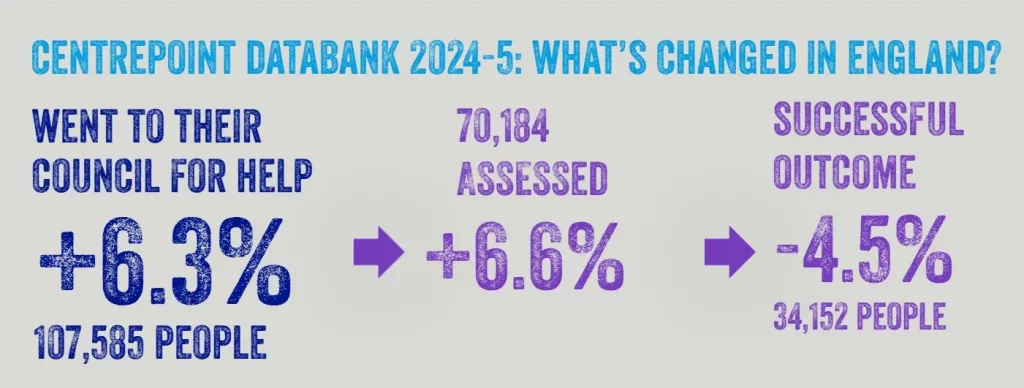
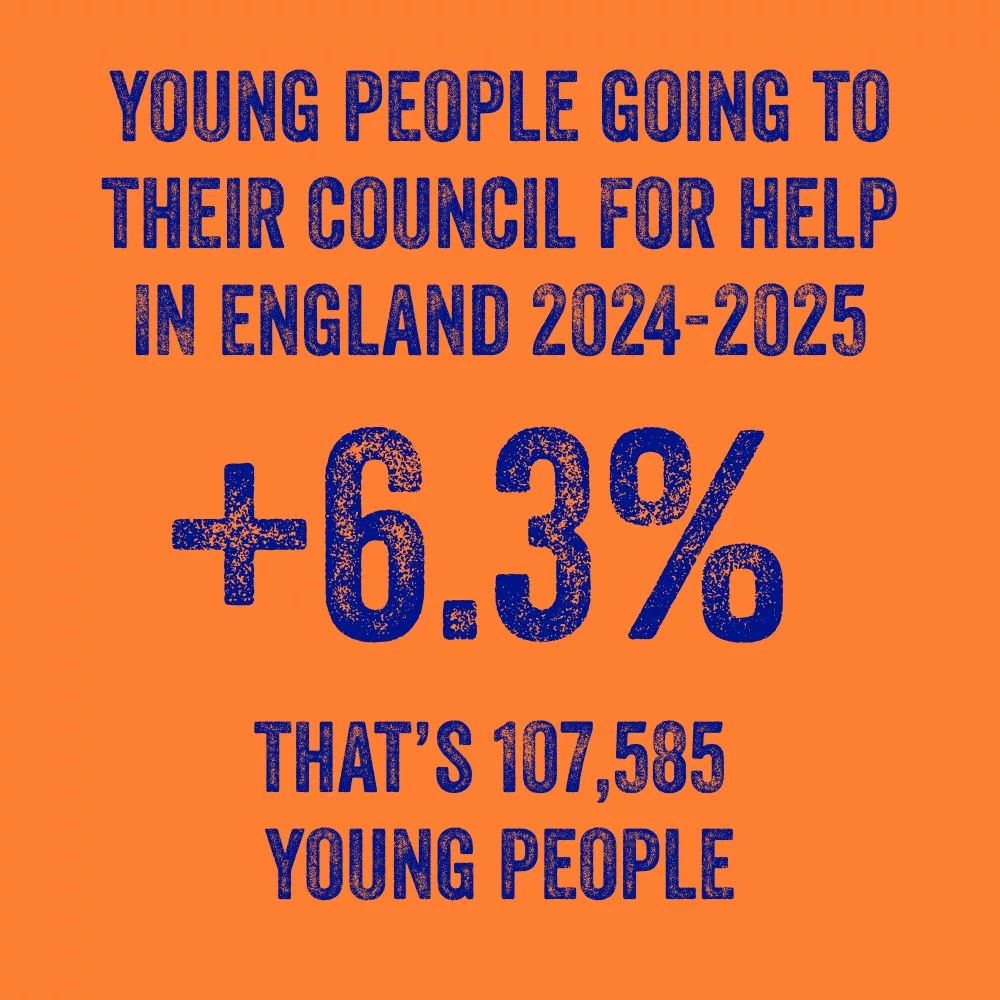
A 6.3% increase in young people approaching their council for help. In total that’s 107,585 young people. It’s important to bear in mind that that the broader estimate of young people experiencing homelessness is closer to 255,000, as reported in our Mind the Gap blog. As a service that supports young people in Brighton & Hove, we’re seeing that increased demand. Rising living costs and increased financial hardship for young people impacts rent affordability and overall housing stability alone.
Young people who are homeless or worried about becoming homeless are legally entitled to a homelessness assessment from their local council under the Homelessness Reduction Act, However, the amount councils actually do varies. Whilst there are clearly young people who continue to fall through the gaps there has been some positive progress. Nationally, there has been a 6.6% improvement in the average being assessed. 65% of young people who approached their council in 2024-5 were assessed. Even better news is that the South East of England figure is a much healthier 74%.
However, the proportion of young people ending the process with a successful outcome has reduced by 4.5% in England.
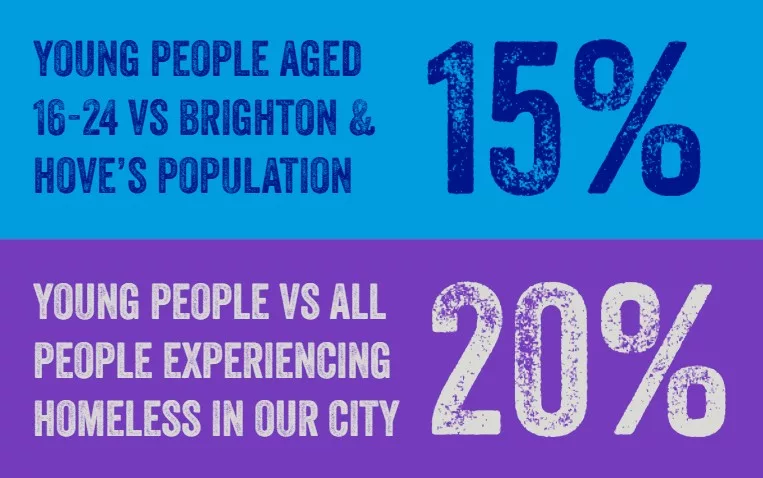
Looking at young people experiencing homelessness in Brighton & Hove, council data points to a large proportion of young people in our city, representing 15% of the population. But young people in Brighton & Hove represent 20% of the homeless population, further demonstrating the difficulties young people are facing now.
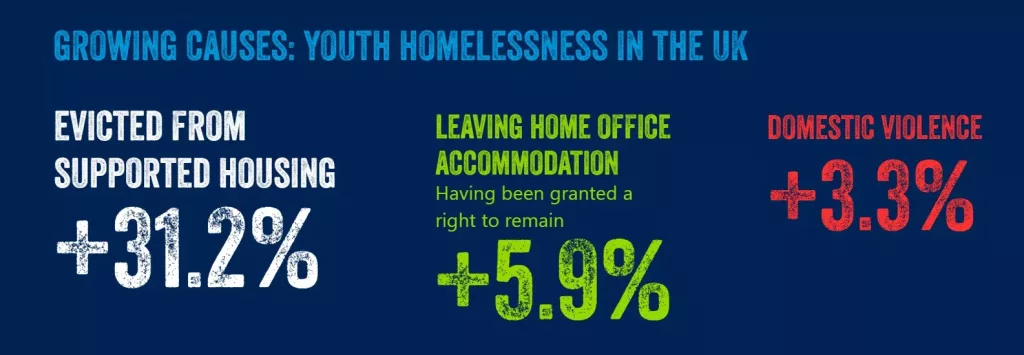
Causes of youth homelessness are reported each year for the UK and three figures have seen growth:
Domestic abuse represented 11% of cases in 2024-5 and has increased by 3.3%
Being required to leave accommodation provided by Home Office as asylum support represented 6% of cases – no doubt linked to faster processing of asylum claims. But when granted leave to remain, young asylum seekers have only 6-8 weeks to find accommodation – often shortened by breakdowns in communication, understanding and a lack of support
7% of cases are evictions from supported housing, but these have increased by 31.2% year on year, because young people are presenting with multiple and complex needs and this, combined with the growth in youth homelessness, has been hard to support, when funding hasn’t kept up with demand.
The biggest cause of youth homelessness is friends and family no longer able to accommodate the young person. 51% of presentations were down to this.
While the UK Government recognises the need to address homelessness, we sincerely hope that funding tracks the ambitions of the National Plan to End Homelessness to move from crisis management to a prevention-first model and is targeted then beyond (and in addition to) people rough sleeping and reaches young people as early as possible, so they can fulfil their potential and enjoy everything that comes with feeling part of a community.